

Wisconsin Department of Financial Institutions
Wisconsin Business Entity Search
Last updated . Register data is refreshed nightly.
Check whether a business name is already on file with the Wisconsin Department of Financial Institutions. Free, no account, all entity types.
Wisconsin Business Entity Search
Search the state's official business records.
Wisconsin's register is searchable free at apps.dfi.wi.gov, run by the Department of Financial Institutions. Not a Secretary of State: Wisconsin, like Hawaii, keeps its companies somewhere else.
If you have an old bookmark on wdfi.org, it is dead. That host now serves an error page. The working address is apps.dfi.wi.gov, and the fee schedule sits on dfi.wi.gov, which is a third spelling of the same agency.
Wisconsin tells you what it does not know
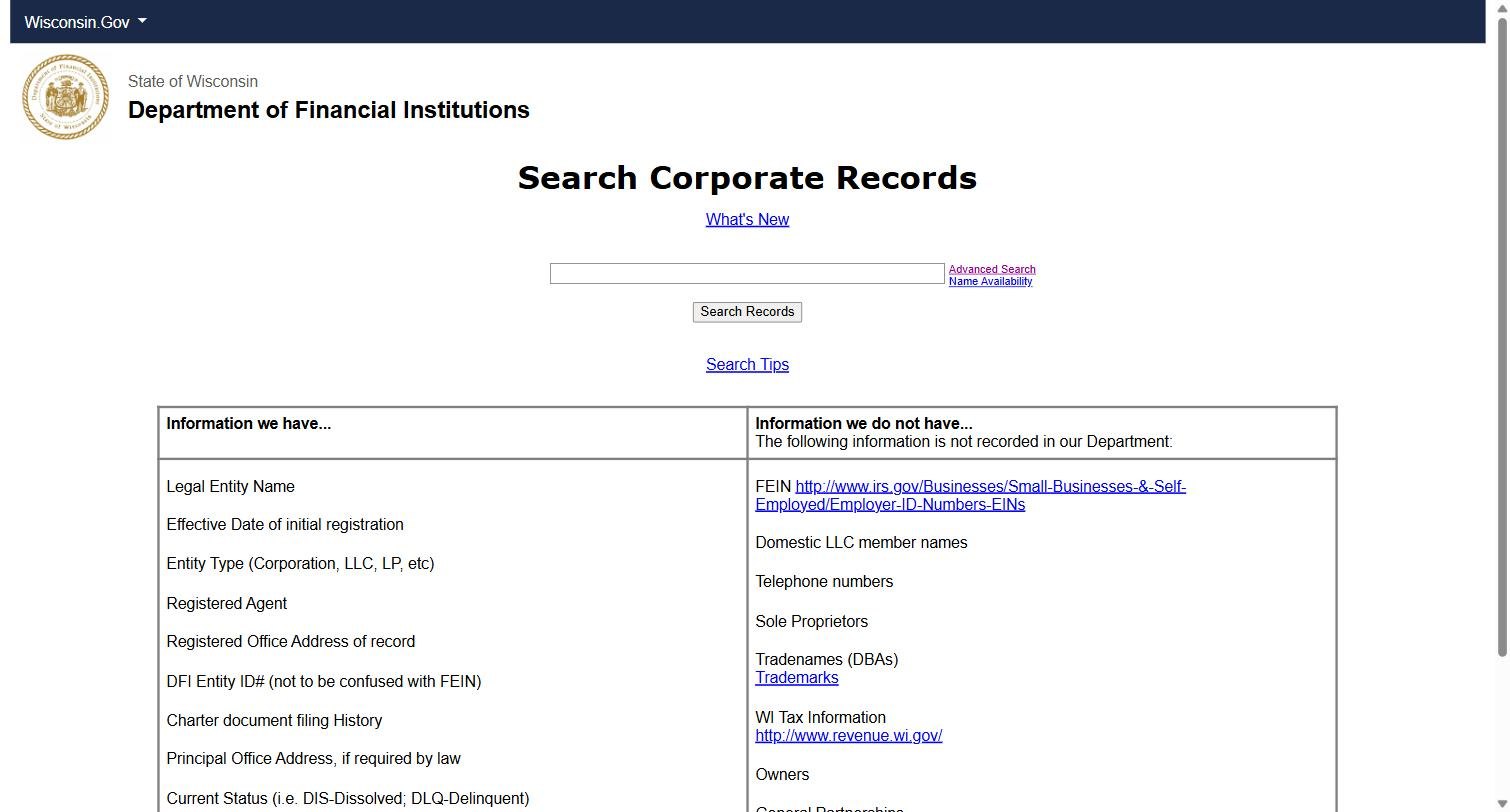
This is the thing that makes the state unusual, and it sits in plain sight on the search page: a two-column table headed Information we have and Information we do not have.
The second column is the one to read:
- Domestic LLC member names
- Owners
- Trade names (DBAs)
- Trademarks
- Telephone numbers
- Sole proprietors
- General partnerships, unless one has filed a Statement of Partnership Authority
- FEINs
No other state states the boundaries of its own register. Most leave you to discover them by finding nothing and drawing the wrong conclusion.
Two consequences follow immediately. You cannot find out who owns a Wisconsin LLC here. And a name that comes back clear tells you nothing whatever about trade names or trademarks, because neither is in this database.
What the register does hold: legal entity name, effective date of registration, entity type, registered agent, registered office, DFI entity ID, charter document filing history, principal office where the law requires one, current status, and the year of the most recently filed annual report.
It shows you the names it turned down
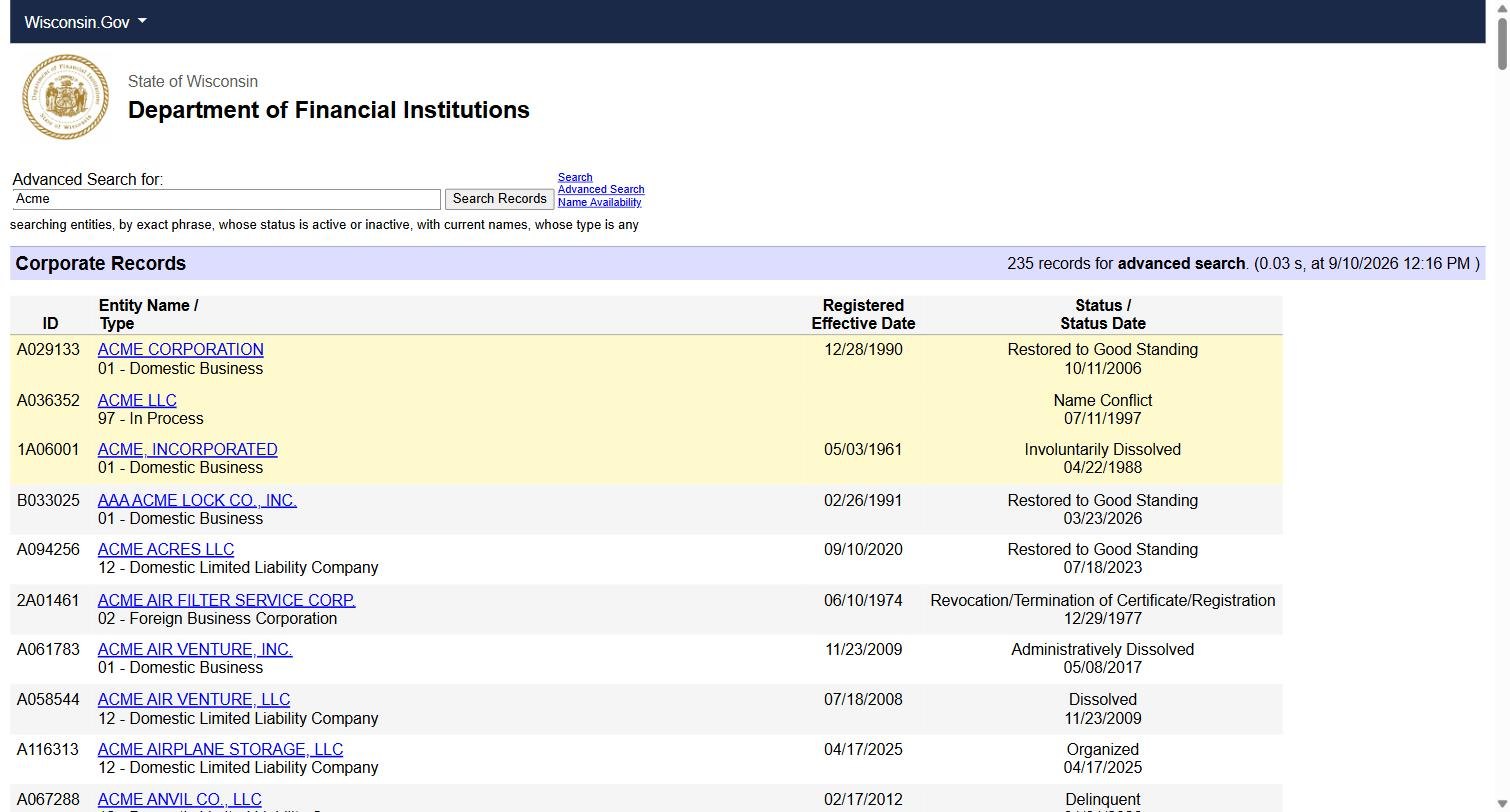
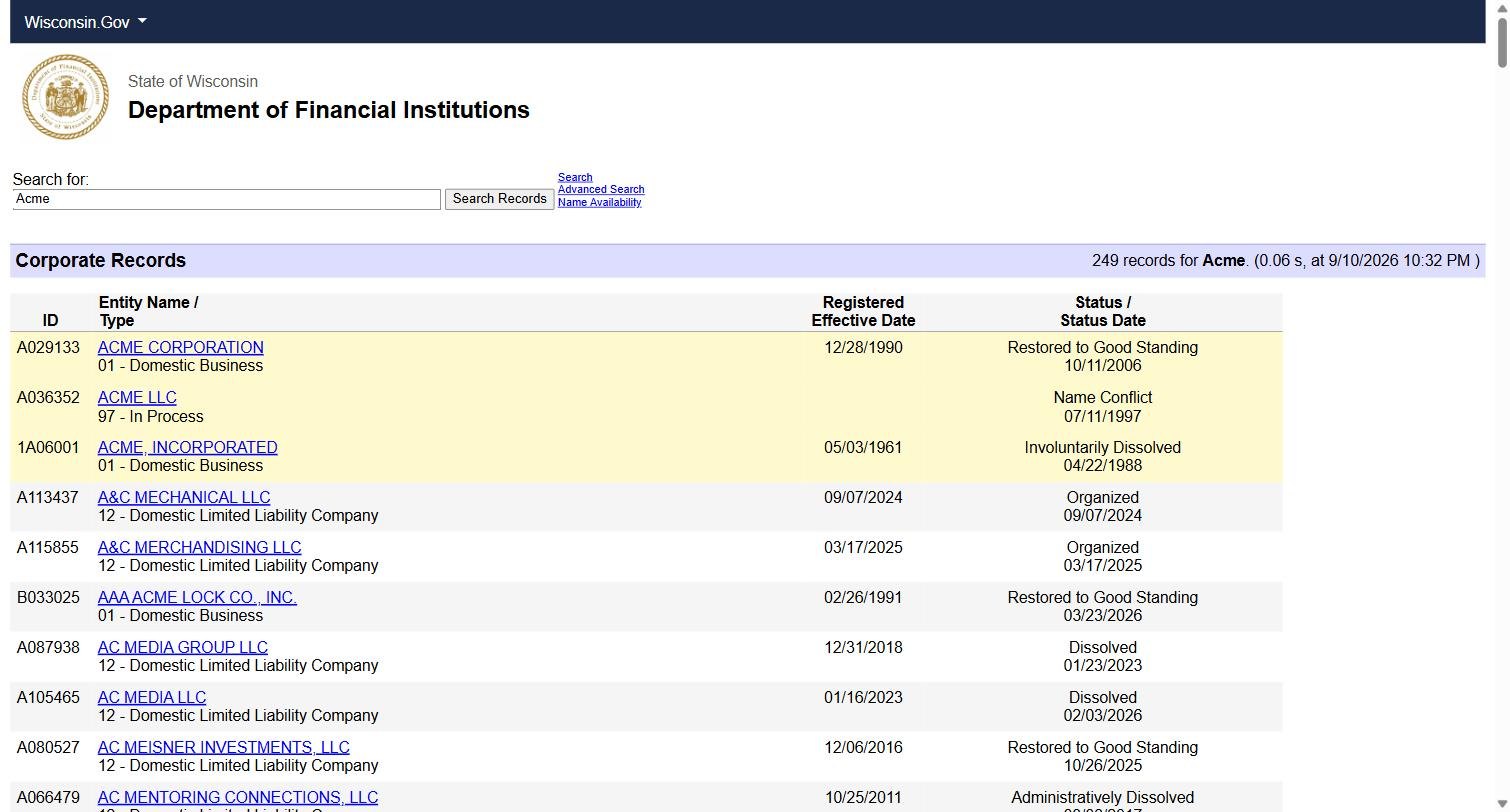
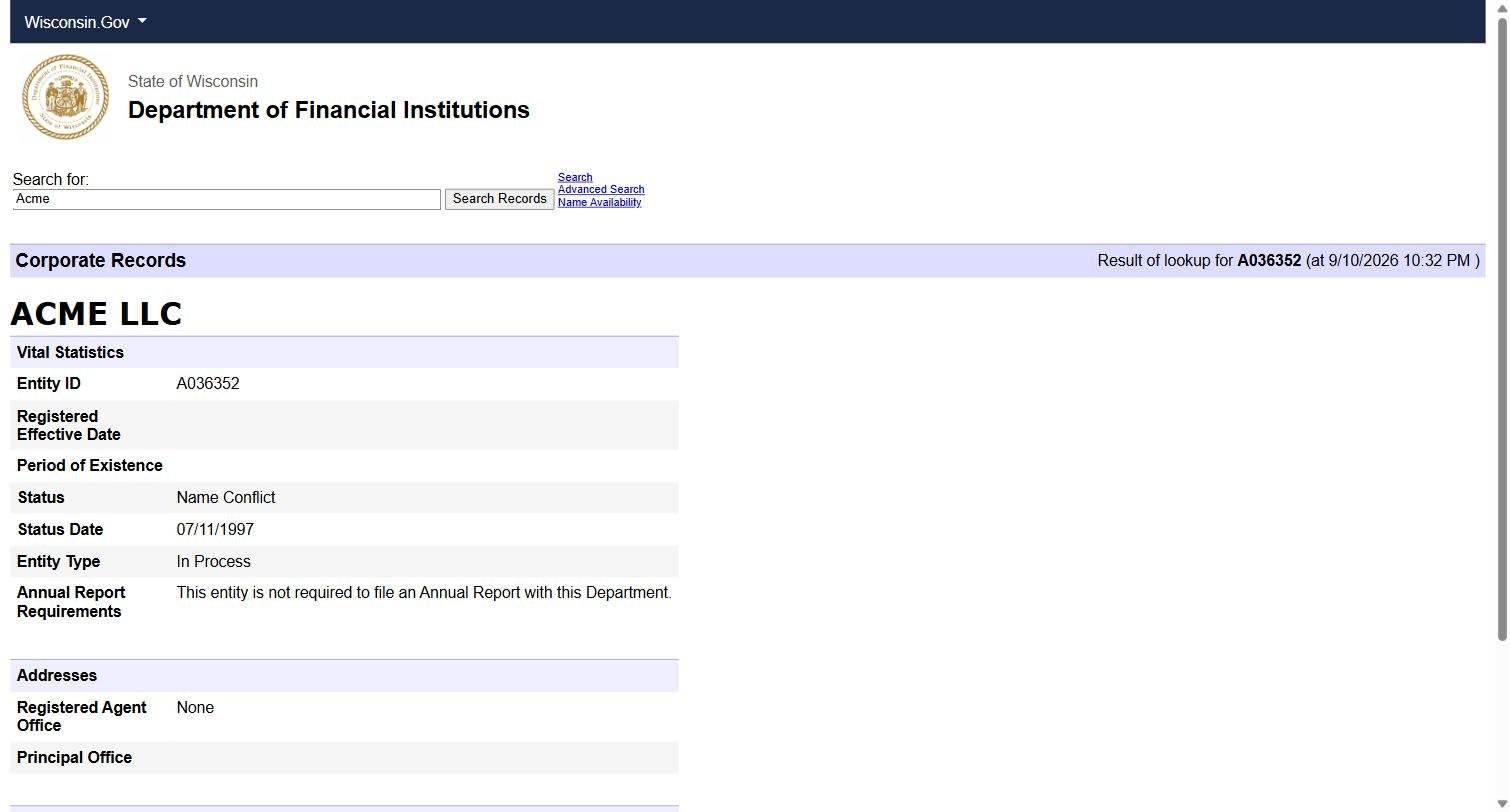
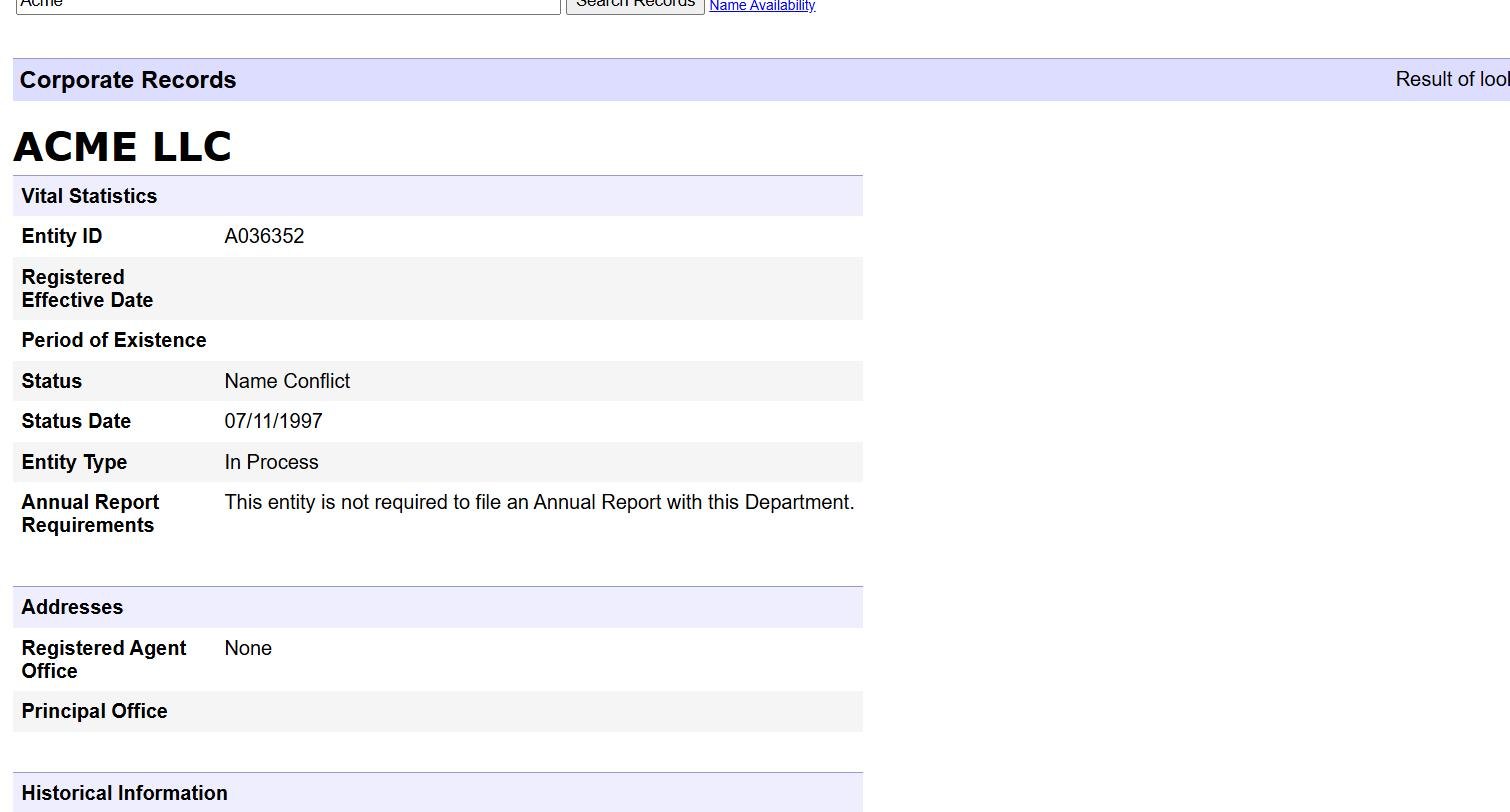
Search Acme and among the 249 results is ACME LLC, entity type In Process, status Name Conflict, dated 11 July 1997. No agent. No addresses. No effective date.
Somebody tried to file that name, the state refused it as too close to something already on the register, and the refusal is still sitting there twenty-nine years later.
We have not found another register anywhere that publishes its rejections. It is worth knowing about for a practical reason: a Name Conflict entry is a record of a name the state has already decided is not distinguishable enough. If your candidate turns one up, that is the state having answered your question in advance.
What a search actually returns
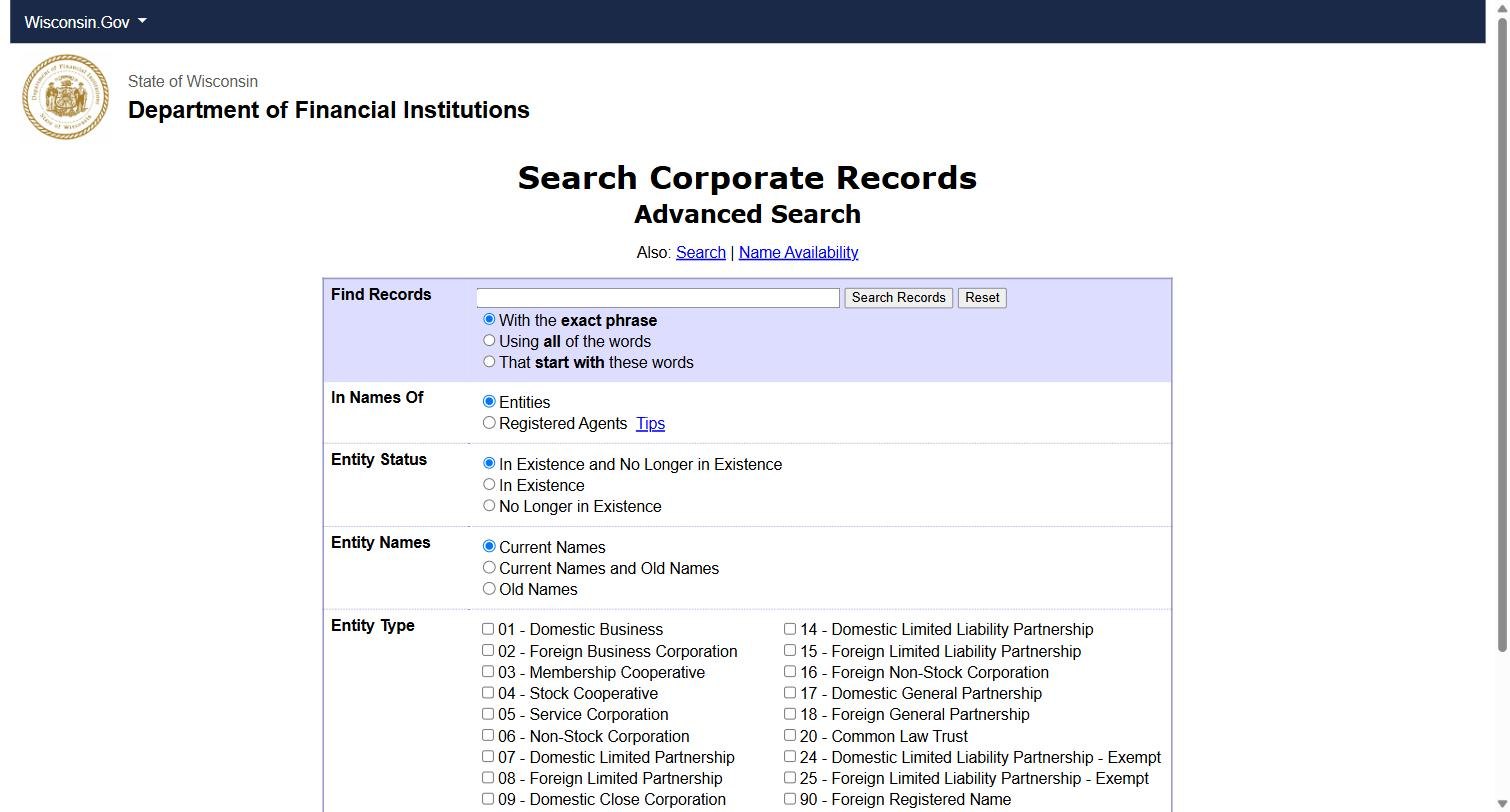
One box, a Search Records button, and separate links for Advanced Search and a dedicated Name Availability tool.
Results come back as entity ID, name and numeric type code, registered effective date, and status with its own status date. Three things about the results screen are unusual:
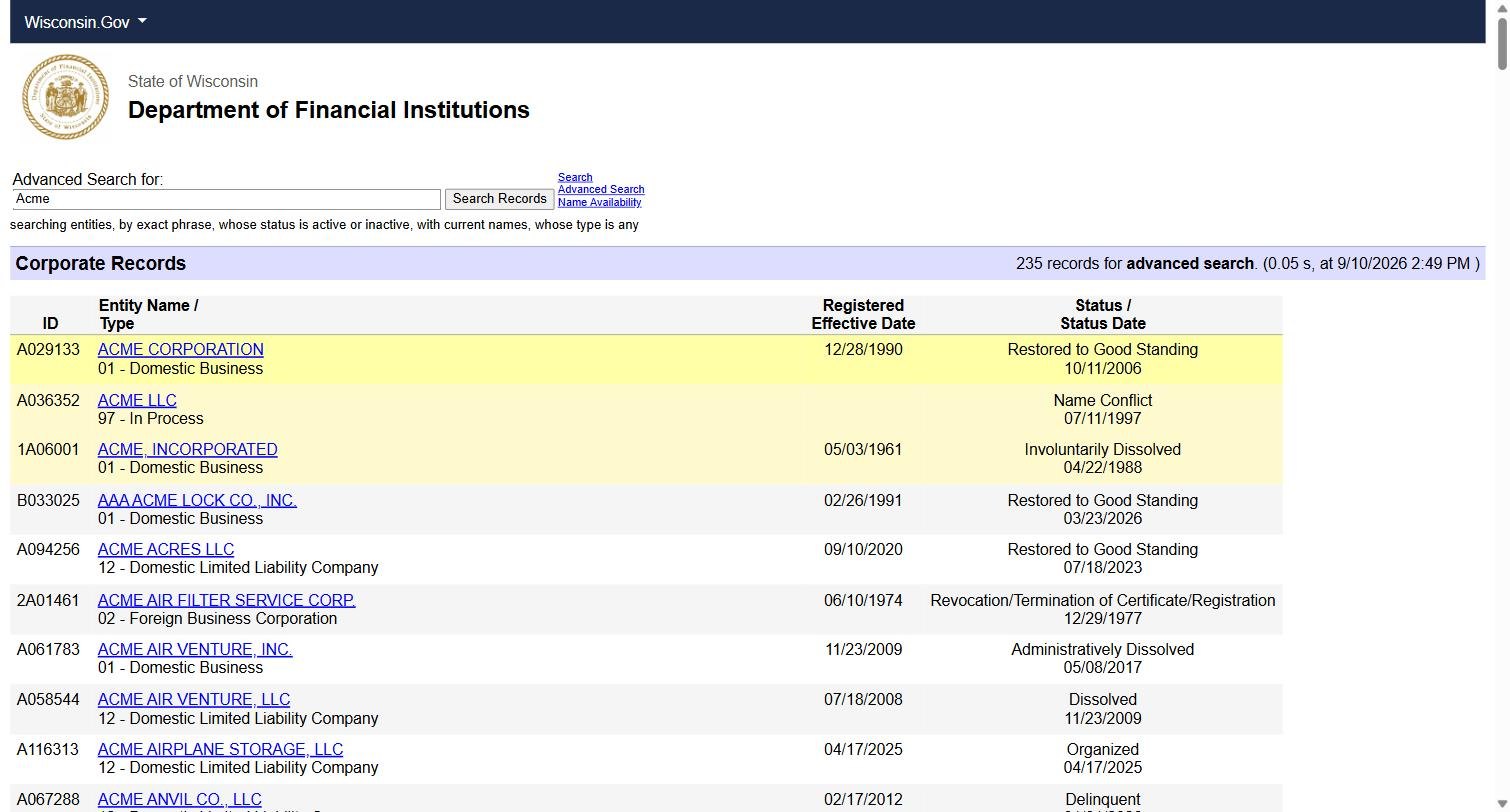
Close matches are highlighted. The near-misses sit in yellow at the top, the rest follow alphabetically. The portal separates what it thinks you meant from what merely matched.
It shows its working. The header reads 249 records for Acme (0.06 s, at 9/10/2026 10:33 PM). A count, a query time and a timestamp. Nothing else we have looked at does that.
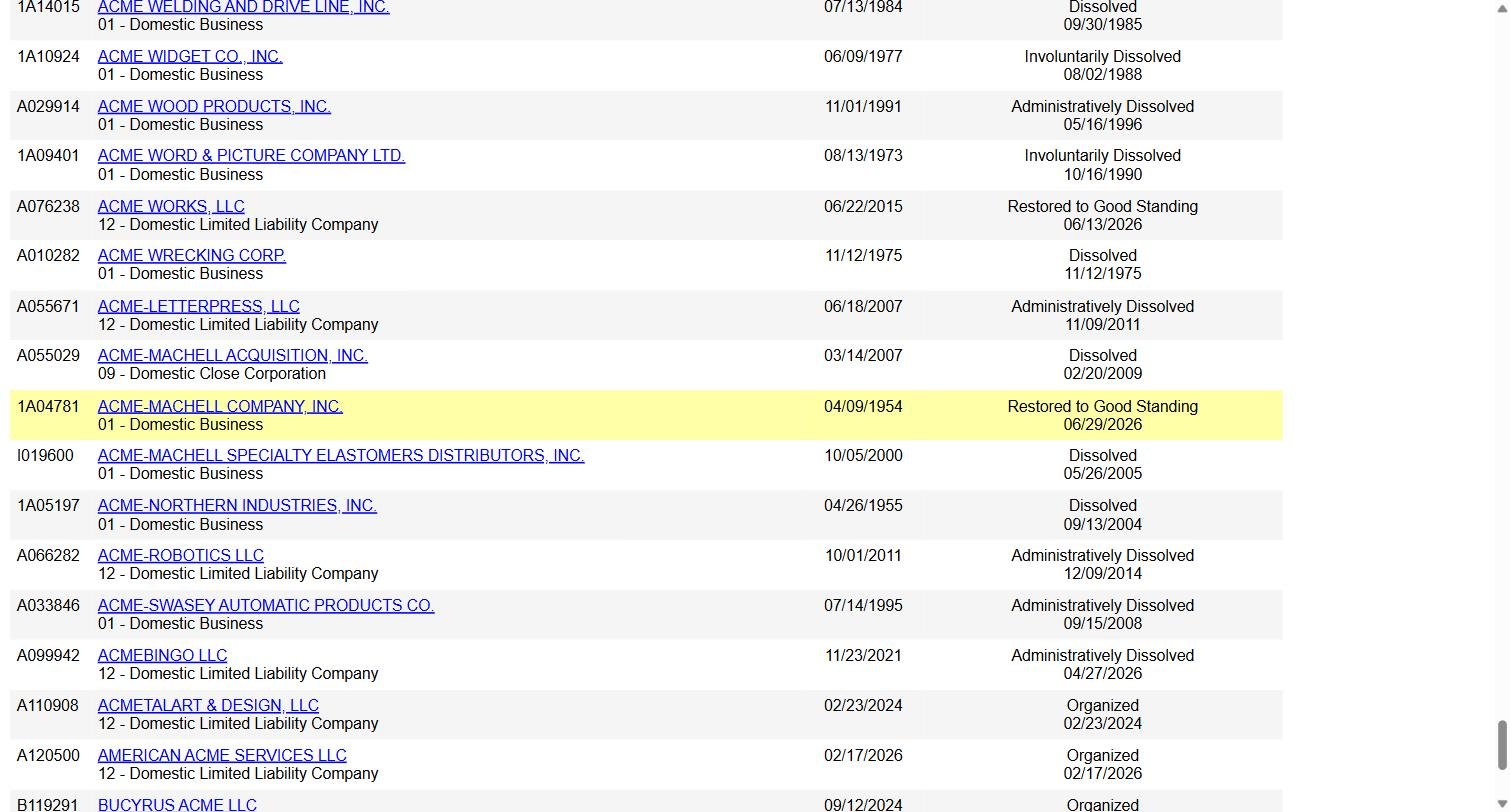
There is no cap. All 249 come back on one page. Texas refuses to list 889 at all, Hawaii silently cuts at 300, South Carolina shows 60 of 188 with no way to reach the rest. Wisconsin just gives you everything.
Why A&C Mechanical comes back when you search Acme
Because Wisconsin matches with the spaces and the ampersand taken out. A&C MECHANICAL reads as ACMECHANICAL, which contains ACME.
That looks like noise and is not. It is the state showing you how it reads names, and it is the same standard applied when somebody decides whether your filing is distinguishable from one already on file. Ohio does this with punctuation, New Hampshire and South Carolina with spacing. If a result looks like your name said out loud, treat it as a conflict whatever the typography.
Reading a Wisconsin status
Fourteen of them, each carrying its own date: Organized, Registered, Incorporated/Qualified/Registered, Restored to Good Standing, Delinquent, Dissolved, Administratively Dissolved, Involuntarily Dissolved, Terminated, Withdrawal, Revocation/Termination of Certificate/Registration, Merged acquired, In Process, and Name Conflict.
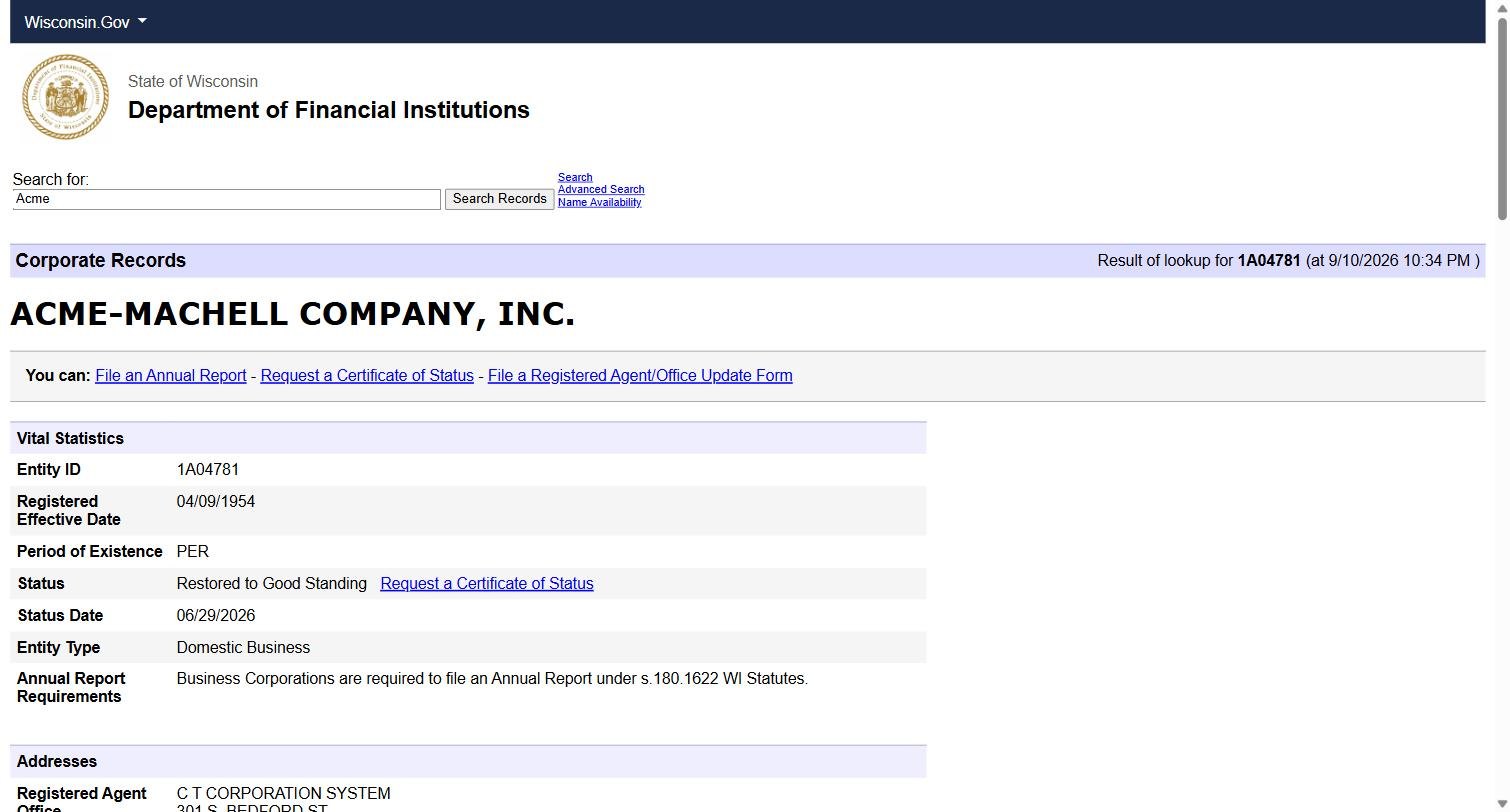
Restored to Good Standing is the one people misread. It means the company lapsed and came back. The date beside it is the date it returned, not the date it was formed. A company showing that status with a 2026 date may have been registered since 1954.
The record, and the table at the bottom of it
Open a record and the top gives you vital statistics, addresses, and an Annual Report Requirements line that cites the statute imposing the duty rather than just asserting it.
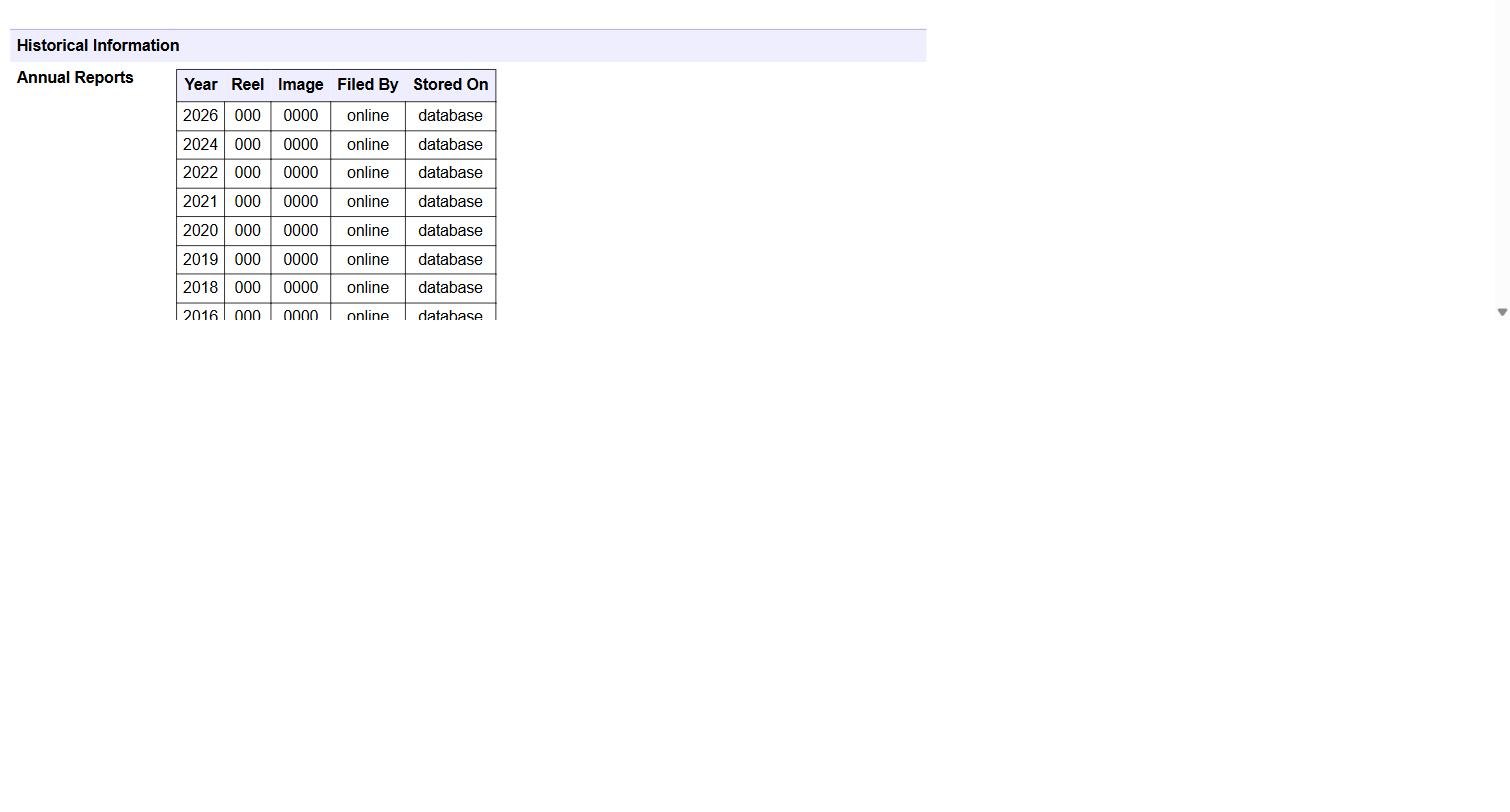
Keep going. Underneath sits Historical Information, and inside that an Annual Reports table listing every year a report was filed, whether it was filed online, and whether the copy lives on a microfilm reel or in the database.
Read that table by its gaps. One Acme record lists 2026, 2024, 2022, 2021, 2020, 2019, 2018, 2016. The missing years are the point, and very few states let you see a company's compliance history at a glance like that.
The record also carries Old Names, a Chronology, and certificates of newly-elected officers and directors. And three things you can do from the page itself: file an annual report, request a certificate of status, or file a registered agent update.
The state has already refused names that looked clear
The Name Conflict entries are the proof of something worth holding on to. Nothing identical to those names existed on the register. They were clear in the only sense a search can test. Wisconsin refused them anyway.
The governing law is Wis. Stat. Chapter 183, and the decision it describes is made by a person applying a standard, not by the database returning rows.
Before you rely on it
Read the do-not-have column first. A clear result here says nothing about trade names, trademarks or who owns what.
Check the Name Conflict entries among your results. They are the state's existing rulings on names like yours.
Take the whole result list. There is no cap, so there is no excuse for stopping at the first screen.
Read the annual report table by what is missing, not by what is there.
Wisconsin filing facts
| Filing | By paper | Filed online |
|---|---|---|
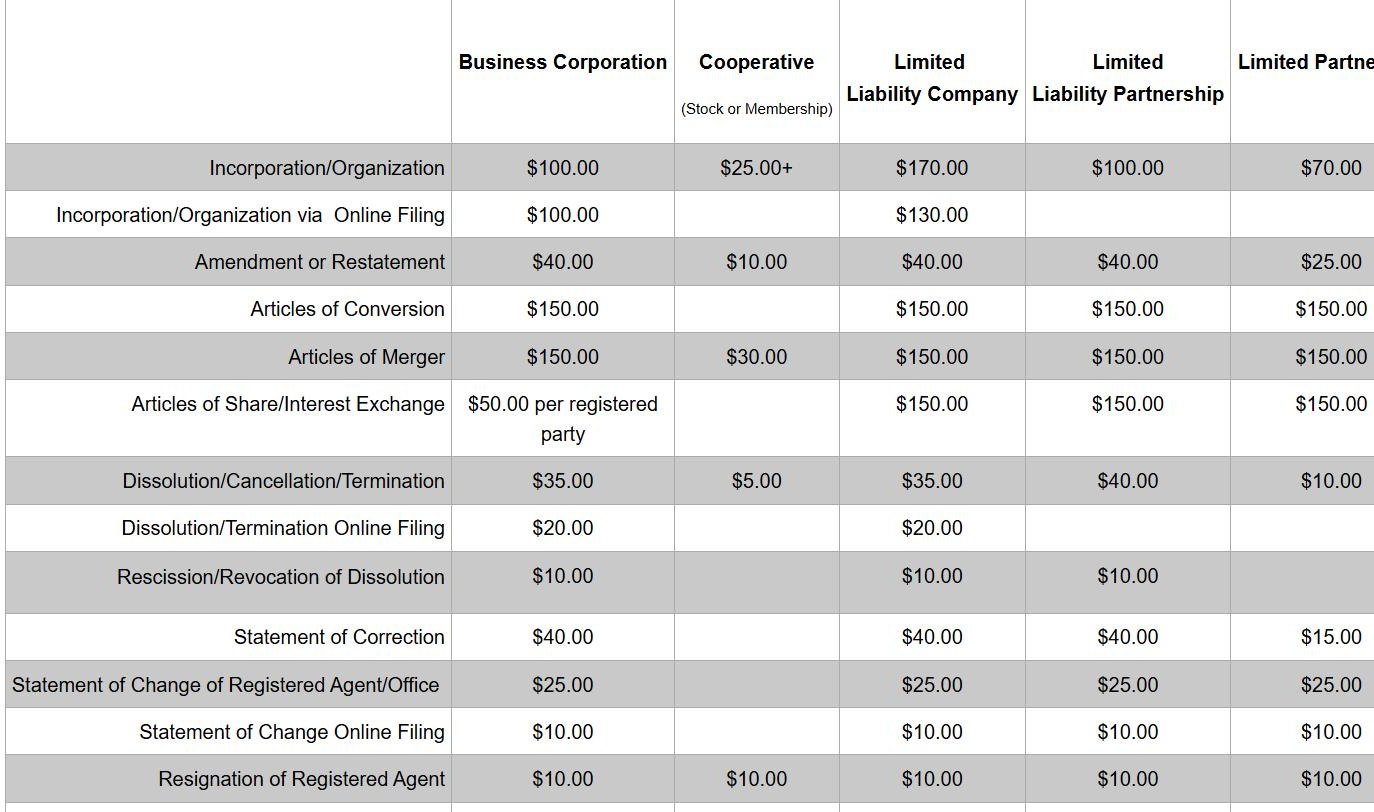
| Articles of Organization | $170.00 | $130.00 |
| Annual Report | $40.00 | $25.00 |
| Change of Registered Agent / Office | $25.00 | $10.00 |
| Dissolution | $35.00 | $20.00 |
| Foreign LLC registration | $100.00 and up | |
| Foreign LLC annual report | $80.00 | $65.00 |
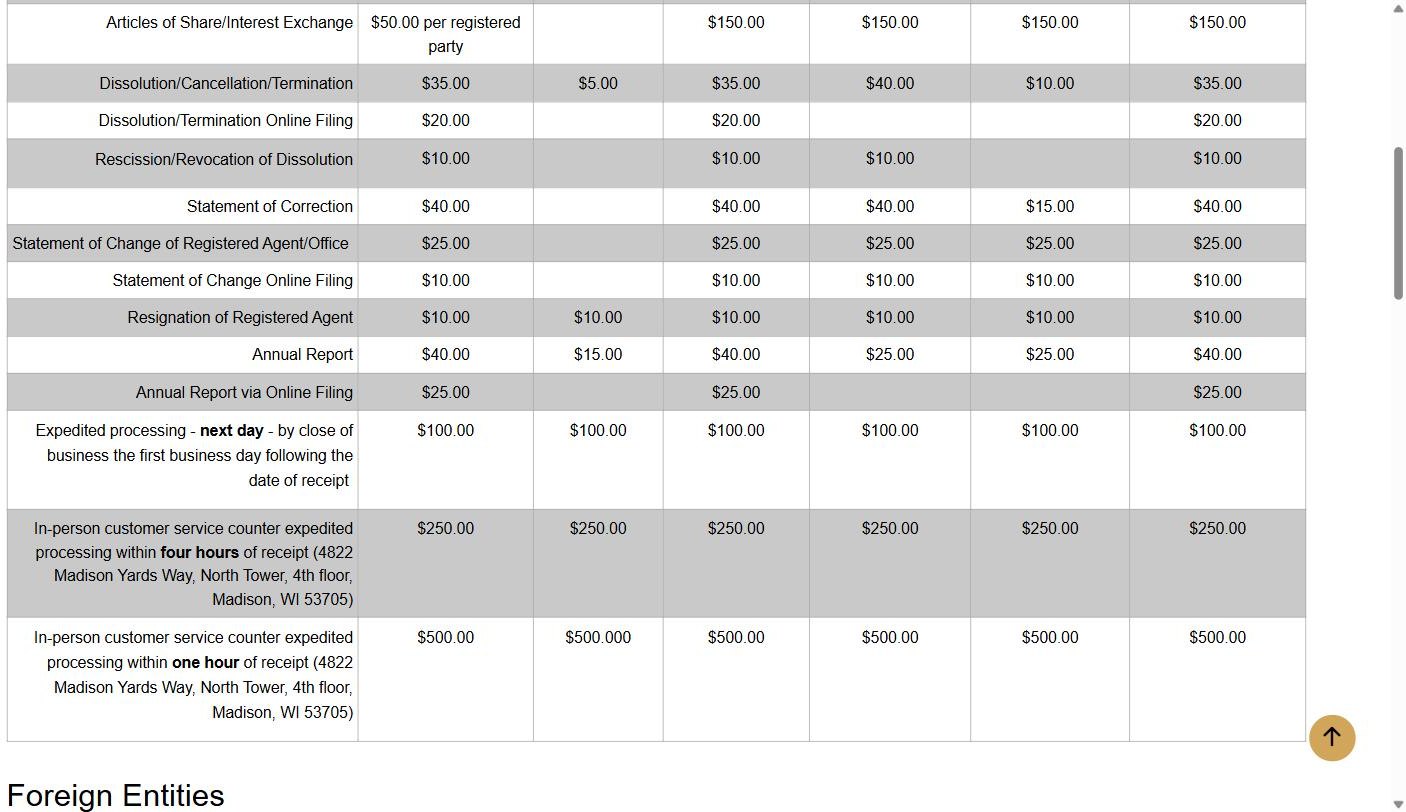
Expedited handling costs $100 for next-day. In person at 4822 Madison Yards Way in Madison it is $250 within four hours or $500 within one hour.
Wisconsin is one of the few states where the paper and online prices differ enough to matter: $40 against $130 across formation and the first annual report. Figures quoted elsewhere as "$130 and $25" are the online prices only.
Against that, the register keeps growing: 79,120 new applications in the 52 weeks to 26 September 2026, up 20.0%, which works out at roughly 316 every business day.
What the register will not tell you: the marks
The do-not-have column said it outright, so this matters more here than in states where the two registers sit together. Wisconsin has 44,739 live registered trademarks, and the words in them are dominated by two things: the state itself, and one motorcycle company.
| word | live marks | times more common than nationally |
|---|---|---|
| davidson | 885 | 78x |
| harley | 1,016 | 82x |
| wisconsin | 1,045 | 81x |
| milwaukee | 585 | 77x |
| master | 421 | 4x |
| power | 624 | 2x |
Harley-Davidson is headquartered in Milwaukee, and the pair of words sits at roughly eighty times the national rate, a concentration matched only by the state's own name. Below that the list flattens fast: master, power, pro and plus all sit at two to four times normal, which is barely above ordinary.
Milwaukee accounts for 15.4% of Wisconsin marks, Madison 8.4%. That is a far less concentrated picture than Nebraska, where Omaha alone accounts for more than half.
What the Wisconsin portal looks like
Captured from the live register. Personal names and addresses are blacked out; everything else is as the state publishes it.
Wisconsin Department of Financial Institutions business services
Business registrations in Wisconsin are held by the Wisconsin Department of Financial Institutions, which maintains the public register this page searches, accepts new filings, and issues the certificates a bank or a counterparty may ask you for. Contact them directly for anything that has to be official.
| Business entity search | apps.dfi.wi.gov/apps/corpsearch/Advanced.aspx |
|---|---|
| Phone | (608) 261-7577 |
| Address | 4822 Madison Yards Way, North Tower, Madison, WI 53705 |
| Office hours | 7:45 a.m.-4:30 p.m. |
| LLC filing fee | $170 (filed on paper; $130 online) |
| Processing | 5-10 business days |
The office handles registration, not disputes. If a name is already taken, they will tell you it is unavailable but not who holds it beyond what the public record shows, and they will not advise on whether your name infringes someone’s mark.
Common questions about Wisconsin business entity searches
How do I check if an LLC exists in Wisconsin?
Search the name on this page or on the state's own portal. What Wisconsin does by default is worth knowing before you read the result: with the exact phrase; status includes defunct; names current only. A match means the entity is on file, and its status line tells you whether it is still active.
How do I verify a company is registered in Wisconsin?
Search the name, then open the record rather than reading the results line. Vital Statistics with entity ID, registered effective date, period of existence, status and status date, entity type, and an Annual Report Requirements line that cites the statute imposing the duty (for a business corporation,…. The status on the record is the one to trust: a dissolved company still appears in a search and still holds its name.
Does a clear search mean my Wisconsin business name is approved?
Not on its own. A no-match result means the name is not on the Wisconsin register today, which is a preliminary answer rather than approval: Wisconsin Department of Financial Institutions decides when it reviews the filing. Worth knowing about Wisconsin in particular: search Acme and A&C MECHANICAL LLC comes back. Wisconsin matches with the spaces and the ampersand removed, so A&C MECHANICAL reads as ACMECHANICAL. South Carolina, New Hampshire and Ohio all do a version of the same thing.
Can I look up who owns a business in Wisconsin?
Wisconsin states on its own search page that domestic LLC member names and owners are not recorded. Officer and director information exists only inside filed annual reports, which are ordered as copies.
How much does it cost to register a business name in Wisconsin?
Wisconsin Department of Financial Institutions charges $170 (filed on paper; $130 online) to file the Articles of Organization, which is the document that forms the company, and currently takes 5-10 business days to process. Reserving a name beforehand is a separate and smaller fee. Confirm the figure with the state before you file: schedules move.
Sources
- Wisconsin business entity search, the official register this page queries.
- Filing fees and processing times: Wisconsin Department of Financial Institutions, Corporation Fees table, verified 2026-09-10. Current schedules are published by the Wisconsin Department of Financial Institutions.
- Formation activity: Census Bureau Business Formation Statistics, retrieved via FRED at the Federal Reserve Bank of St Louis.
- Federal trademark data: United States Patent and Trademark Office, 3,374,058 live registrations cross-referenced against the state registers. Live excludes both abandoned applications and cancelled registrations.
- Office contact details: Wisconsin Department of Financial Institutions, confirmed against the office’s own contact page.
- Naming and reporting rules: Wisconsin Department of Financial Institutions, Corporation Fees table.
- Naming statute: Wis. Stat. 183.0108, published by the state.
- State seal: public domain image via Wikimedia Commons.